
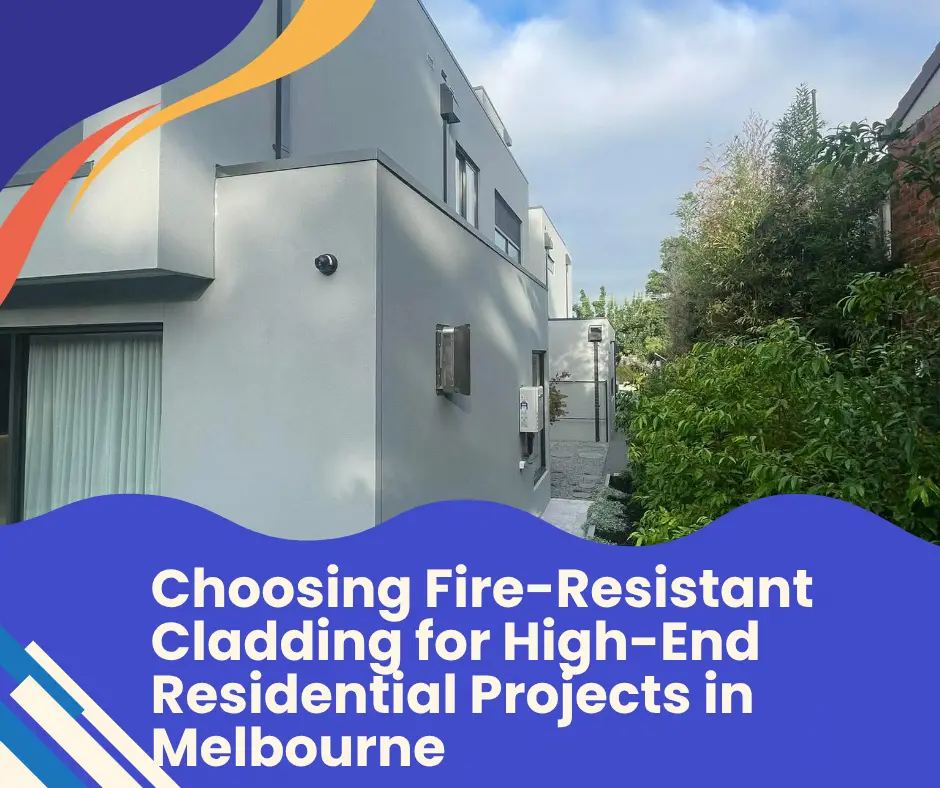
Prioritising Safety Without Limiting Design Possibilities
Luxury home construction demands careful attention to every material specified for the building envelope. While appearance remains a key consideration, builders must also ensure external wall systems meet the performance requirements expected on modern residential projects. Fire performance is one of the most important factors to evaluate when selecting facade materials.
As regulations continue to evolve and clients become more informed, understanding fire resistant cladding Melbourne builders specify has become an essential part of responsible project planning. Selecting appropriate systems early can help streamline approvals, support compliance, and contribute to the long-term safety of the completed home.
Understand the Role of Fire-Resistant Cladding
Fire-resistant cladding is designed to help limit the spread of fire across external walls while maintaining the integrity of the facade system.
Although no single product guarantees complete fire protection, properly specified cladding systems can improve the overall performance of the building envelope when combined with appropriate design and construction practices.
Builders should always consider the entire wall assembly rather than focusing on one material alone.
Begin With Project Requirements
Every custom home is different, and the appropriate cladding solution depends on the specific project.
Before comparing products, review:
- Architectural drawings
- Engineering documentation
- Site conditions
- Building classification
- Applicable regulations
Understanding project requirements from the outset allows builders to identify suitable cladding systems before procurement begins.
Consider the Complete Wall System
Fire performance is influenced by more than the visible external finish.
Builders should also evaluate:
- Structural framing
- Wall insulation
- Sarking and membranes
- Fixing systems
- Cavity design
- Joint detailing
Each component contributes to the overall performance of the external wall system.
Selecting compatible materials helps achieve better results than assessing products individually.
Balance Safety With Architectural Design
Luxury homes often feature striking facades with multiple textures and materials.
Builders should work closely with architects to ensure fire performance does not compromise the intended design.
This may involve selecting products that offer:
- Contemporary finishes
- Clean architectural lines
- Flexible design options
- Proven performance
Many modern cladding systems provide both aesthetic appeal and reliable fire resistance when correctly specified.
Verify Product Certification
Builders should avoid relying solely on product brochures or marketing information.
Before specifying any system, confirm that relevant documentation is available, including:
- Product testing information
- Manufacturer certifications
- Technical data sheets
- Installation requirements
- Compliance documentation
Verifying product information early supports informed decision-making and reduces the likelihood of specification changes later.
Pay Attention to Installation Quality
Even the highest-quality materials depend on proper installation.
Builders should ensure installers follow:
- Manufacturer guidelines
- Approved fixing methods
- Required clearances
- Joint detailing
- Quality assurance procedures
Correct installation helps the facade perform as intended throughout its service life.
Quality workmanship remains just as important as material selection.
Coordinate With Design Professionals
Fire-resistant facade systems benefit from collaboration throughout the design process.
Builders should communicate with:
- Architects
- Building designers
- Engineers
- Building surveyors
- Specialist facade contractors
Early discussions help resolve technical questions before they affect construction programmes.
Collaboration also reduces the need for costly design revisions.
Think About Long-Term Performance
Fire performance should be considered alongside other important characteristics.
Builders should also assess:
- Weather resistance
- Durability
- Maintenance requirements
- Thermal performance
- Appearance over time
A well-designed facade should provide balanced performance across all these areas rather than excelling in only one.
Long-term reliability remains an important consideration for premium residential construction.
Plan for Future Maintenance
Routine inspections help maintain the condition of any external wall system.
Builders should provide clients with guidance regarding:
- Visual inspections
- Cleaning recommendations
- Repair procedures
- Product warranties
- Ongoing maintenance responsibilities
Supporting homeowners after handover contributes to the long-term performance of the facade.
Frequently Asked Questions
1. What is fire-resistant cladding?
Fire-resistant cladding refers to external wall systems designed to improve the fire performance of a building when installed as part of a compliant wall assembly.
2. Why is fire-resistant cladding important?
It helps support safer building performance while contributing to compliance with applicable construction requirements.
3. Does fire-resistant cladding affect architectural design?
No. Many modern systems provide both architectural flexibility and strong fire performance.
4. Should builders consider the entire wall assembly?
Yes. Fire performance depends on how all wall components work together, not just the external finish.
5. Why is product certification important?
Certification provides evidence that products have been assessed according to relevant testing and performance standards.
6. Can poor installation affect fire performance?
Yes. Incorrect installation may reduce the effectiveness of the specified cladding system.
7. Who should be involved when selecting fire-resistant cladding?
Builders should collaborate with architects, engineers, building surveyors, and facade specialists during the design process.
8. Is fire performance the only factor to consider?
No. Durability, maintenance, weather resistance, and thermal performance should also be evaluated.
9. Should homeowners maintain fire-resistant cladding?
Yes. Regular inspections and maintenance help preserve the condition of the external wall system.
10. When should builders specify fire-resistant cladding?
Material selection should occur during the design phase so compliance and construction planning can be coordinated effectively.
Bottom Line
Selecting fire resistant cladding Melbourne builders can confidently specify requires careful planning, technical understanding, and collaboration between the project team. By evaluating certified products, considering the complete wall system, and following approved installation methods, builders can deliver luxury homes that balance safety, durability, and architectural excellence.

